
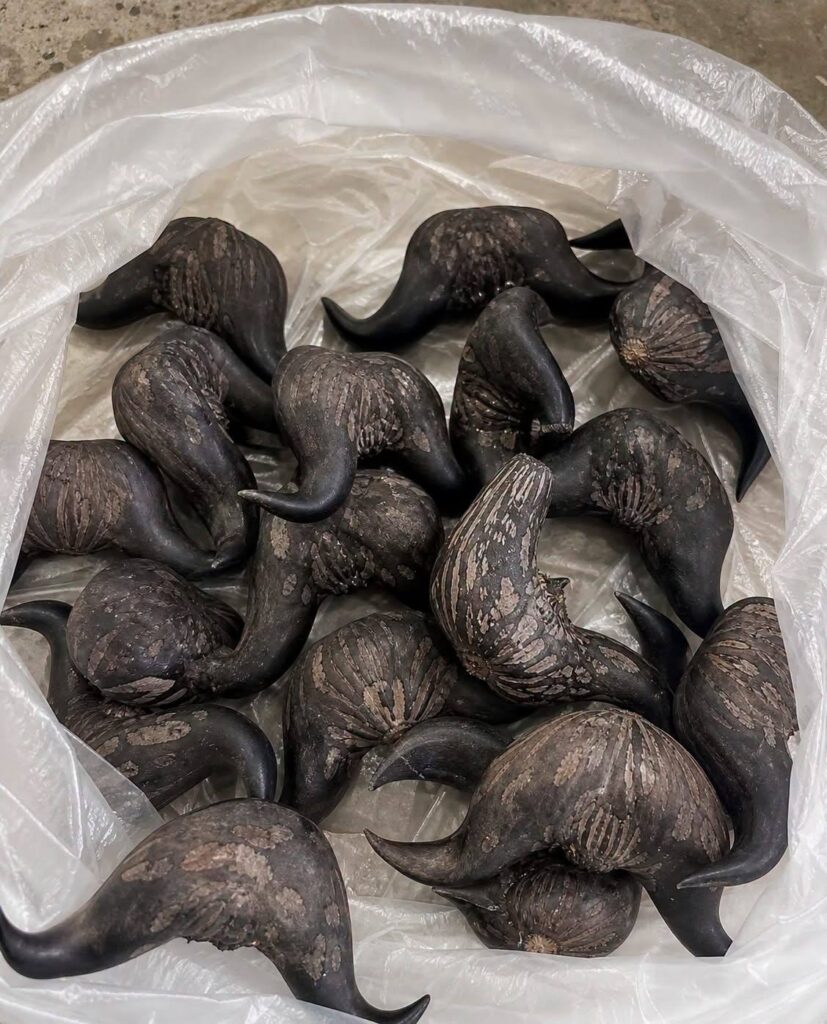
These things look like fossils dredged from a nightmare pond. Black, horned, and armored, they barely resemble food—and yet people have been eating them for centuries. But here’s the catch: get them wrong, or eat them the wrong way, and you could be in real trouble. One photo, one guess, one careless bite could cha… Continues…
They may look like tiny water-borne skulls or bat-shaped relics, but water caltrops are very real food for many communities. Hidden inside the hard, spiked shell is a pale, starchy kernel with a gentle, chestnut-like flavor, boiled and eaten as a snack, stirred into porridges, or ground into flour in parts of South Asia. Their strange, defensive armor evolved to protect the seed; for humans, it simply demands patience and respect.
Confusion, however, can be dangerous. Water caltrops are not Chinese water chestnuts, and their freshwater habitat means they can harbor parasites if eaten raw or undercooked. A dramatic photo on social media cannot confirm what species you’re holding, where it grew, or whether it’s safe. Only careful identification, trusted sourcing, and thorough cooking turn this sinister-looking “devil’s nut” into what it truly is: an ordinary, quietly nourishing food.