
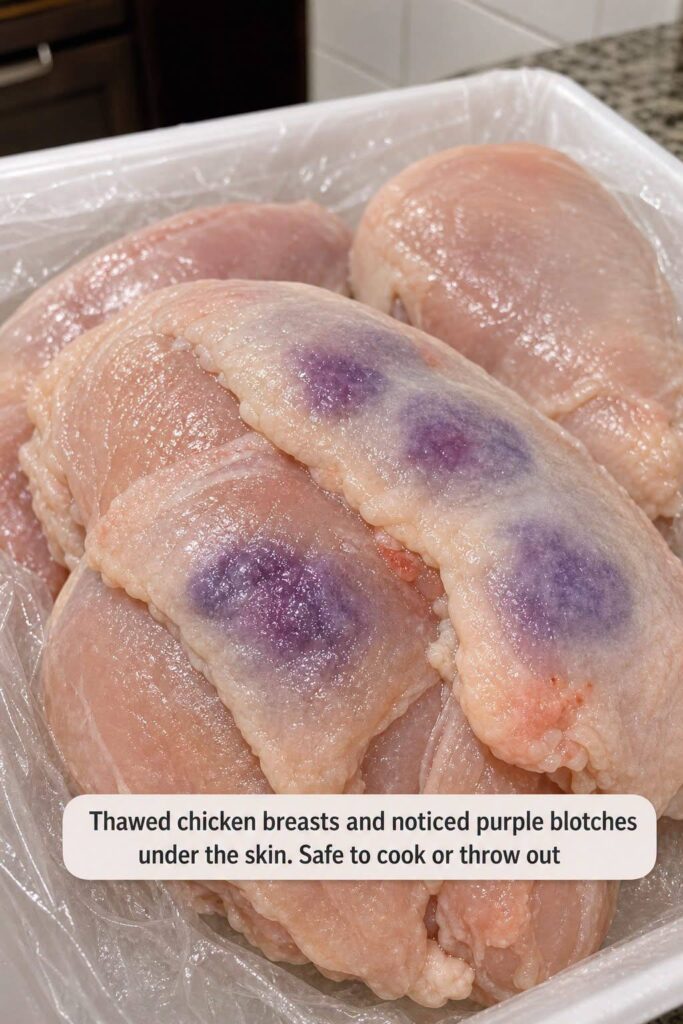
The panic hits fast. You peel open the chicken, and there it is: dark, purple blotches blooming under the skin like bruises you never saw in the store. Suddenly, dinner feels dangerous. Is this meat secretly rotten? Is your family at risk? The truth is more complicated, more surprising, and more importa… Continues…
Those unexpected purple patches on thawed chicken are usually less sinister than they look. In many cases, they come from myoglobin and bone marrow pigments shifting during freezing and thawing, especially in younger birds with more porous bones. Ice crystals can rupture cells, letting these pigments seep into nearby tissue and stain it purple or reddish. Visually, it’s unsettling—but often harmless if the chicken has been kept cold and handled correctly.
What truly matters is not the color alone, but the combination of smell, texture, and storage history. Fresh chicken should smell neutral, feel moist but never slimy, and show no green or gray tones. If it passes those checks and has been thawed safely in the fridge or in cold water, cooking it to 165°F (74°C) will destroy harmful bacteria. In the end, your senses—and a thermometer—are far better guardians of safety than color shock ever will be.