
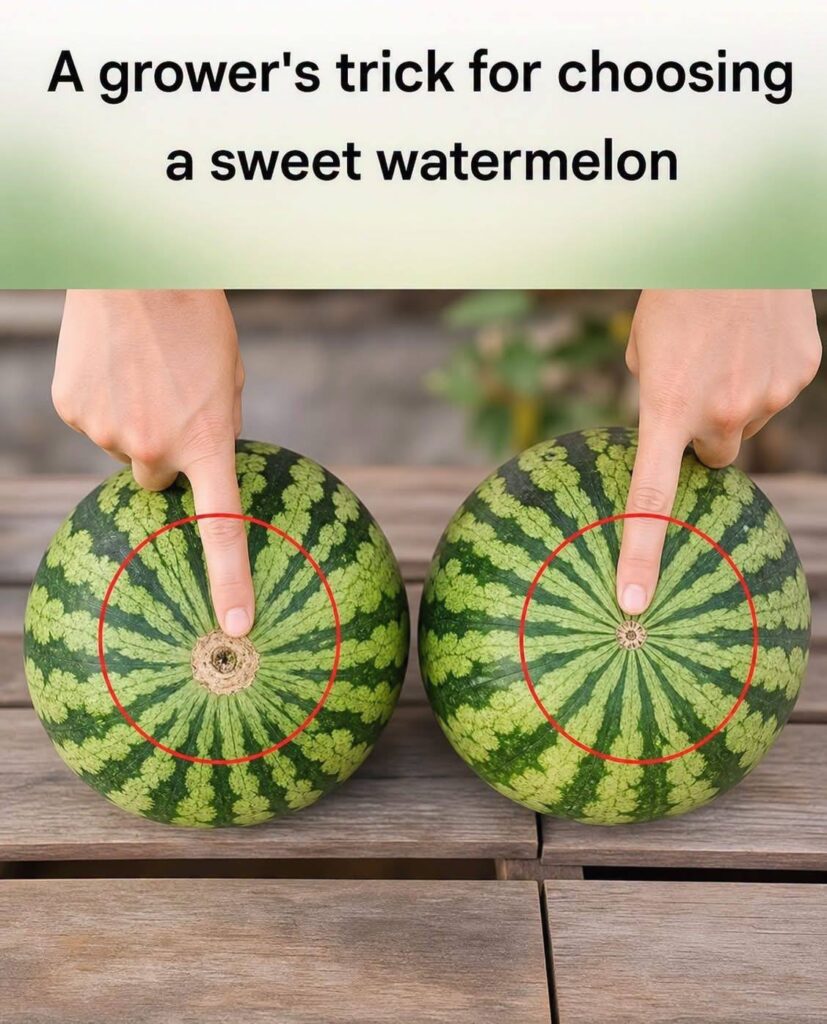
Choosing the wrong watermelon can ruin the whole moment. You carry it home, slice it open, and your heart sinks at the pale, watery flesh. But there are quiet signals hiding in plain sight. Color, weight, even the stem are whispering clues about ripeness and juici… Continues…
You don’t need x-ray vision to choose a good watermelon; you just need to know where to look. Start with the field spot—the patch where the melon rested on the ground. A creamy, golden-yellow spot often means it had time to mature on the vine. Then run your hand over the rind. It should feel firm, without deep bruises, cracks, or soft areas that suggest damage or overripeness.
Next, lift it. Among melons of similar size, the one that feels unexpectedly heavy is more likely to be full of juice. If a bit of stem remains, a dry, brownish stem can hint that it finished ripening before harvest. None of these signs alone is perfect, but together they dramatically raise your odds. Once you’ve chosen, chill it well, slice it open, and let that first sweet bite confirm that those extra few seconds at the market were worth it.