
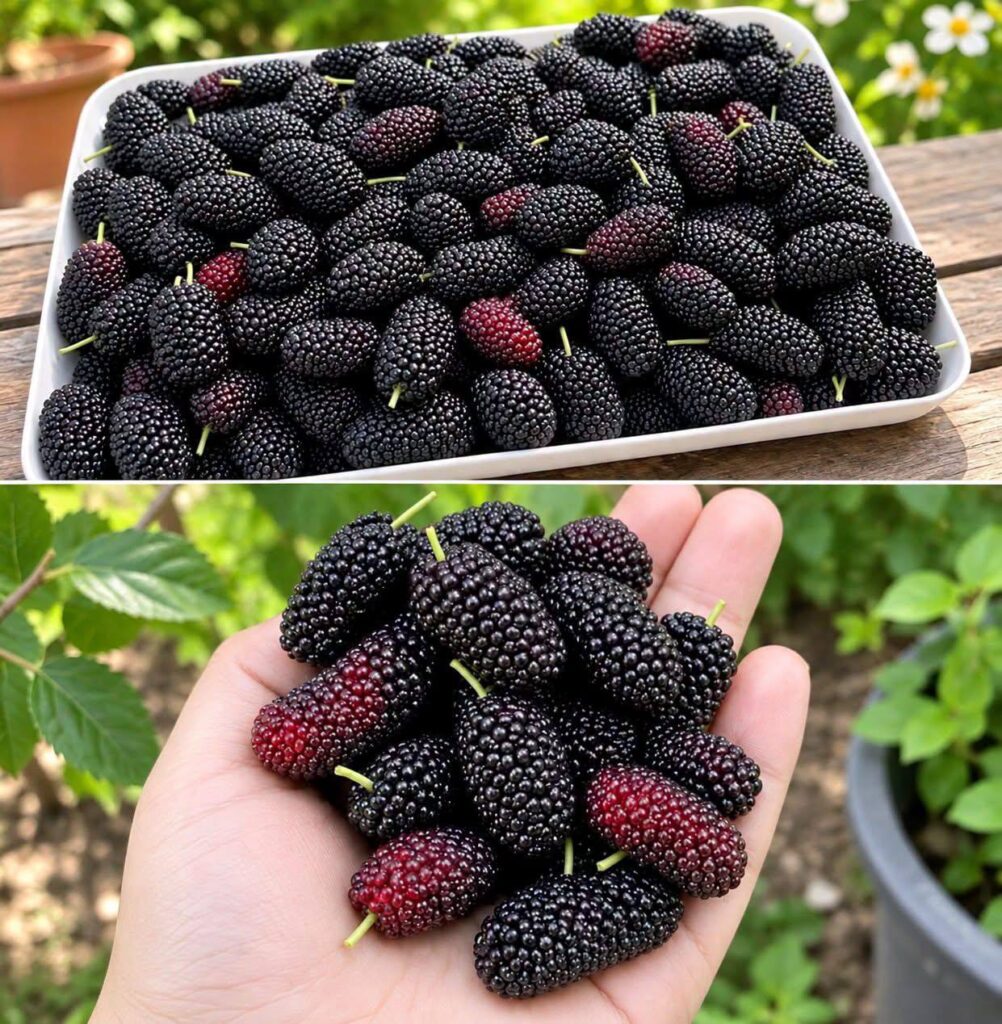
You think you’ve found wild blackberries. You reach out, certain, casual—until something feels wrong. The shape is off. The stem shouldn’t still be there. That small hesitation could be the difference between recognizing a seasonal treasure and misidentifying what’s right in front of you. Because these aren’t blackberr… Continues…
What you’re probably holding is a mulberry, a fruit that quietly mimics blackberries at a glance but tells a different story up close. Mulberries hang from trees, not thorny brambles, and their berries are slimmer, more tapered, and often still attached to a fine, fragile stem. Their colors deepen from red to near-black, carrying the same anthocyanin pigments that give many dark fruits their inky, appealing hue.
Beneath that color is a modest but worthwhile mix of fiber, vitamin C, potassium, and plant compounds that fit neatly into an everyday, balanced diet. Fresh, they’re soft and mildly sweet, perfect for scattering over yogurt or blending into a smoothie. Dried, they become denser and sweeter, with more sugar and calories per handful. No miracle cure, no secret superfood—just a simple fruit worth recognizing, and enjoying, for exactly what it is.