
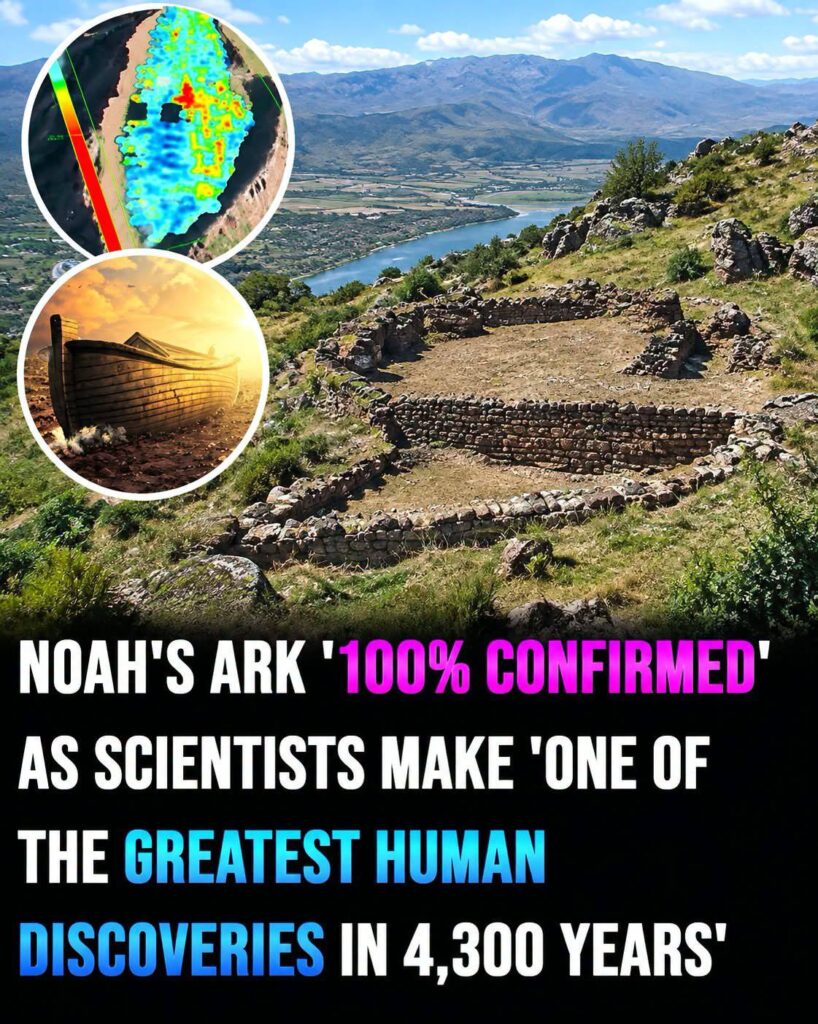
The hunt for Noah’s Ark is reigniting a fierce debate over ancient faith and evidence. Researchers pursuing a possible link to Noah’s Ark say underground scans reveal features worth probing, even as geologists point to nature rather than scripture. Now, planned drilling could test those extraordinary claims and expose the distance between an ancient hope and the buried trut… Continues…
In eastern Turkey, the boat-shaped Durupinar formation near Mount Ararat is facing renewed scrutiny more than six decades after its identification in 1959. The Noah’s Ark Scans project reports radar patterns that researchers interpret as possible underground corridors. Its proposed next steps include extracting narrow cores and eventually deploying an underground robot called Gopher. Supporters also cite measurements they believe resemble biblical descriptions, but those comparisons do not establish that the formation was a vessel.
The scientific obstacles remain substantial. Earlier investigations uncovered no archaeological evidence, and modern geologists generally regard Durupinar as a natural formation shaped by erosion. The team says 88 soil samples collected in 2024 showed elevated organic matter and potassium inside the site—results it considers worth investigating, not proof of an ancient ship. Despite declarations of certainty, Noah’s Ark has not been confirmed here. Further testing may clarify the formation’s origins, but the extraordinary interpretation remains unproven.