
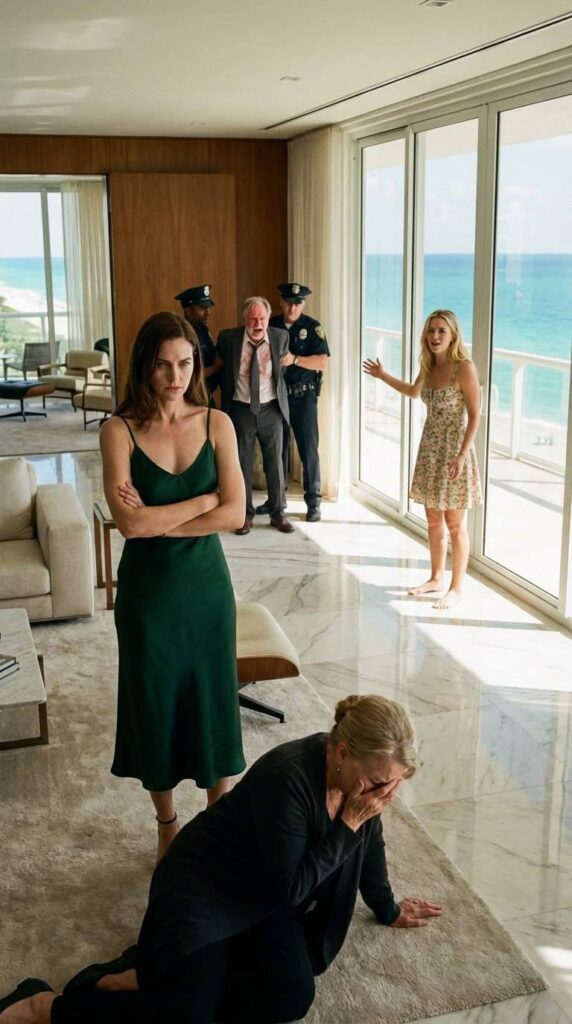
Chapter 1: The Illusion of Harbor
The ink had barely dried on the closing documents before the sheer gravity of my independence finally settled into my marrow. At twenty-eight, I wasn’t supposed to feel like a survivor of a long, silent war, yet as I stood in the center of the living room, that was precisely the sensation washing over me.
Promoted Content
This was The Azure, a sleek, glass-paneled high-rise piercing the Seattle skyline. The luxury apartment wasn’t massive, but to me, it was a sprawling kingdom. Floor-to-ceiling windows framed the choppy, iron-gray waters of Puget Sound, turning the chaotic Pacific Northwest weather into my own private, ever-changing mural. The air inside smelled of raw timber from the polished hardwood floors and the faint, chemical tang of fresh eggshell paint.
Mine. The word echoed in the empty space, a quiet victory chant. I hadn’t acquired this sanctuary to parade my success before peers or to satisfy some shallow aesthetic craving. I bought it because it was the solitary thing in my entire existence that bore my name alone. It was the physical manifestation of canceled vacations, ramen-fueled midnights coding freelance software projects, and a decade of suffocating under a blanket of familial obligation.
As twilight bled a bruised purple across the bay, I grabbed my keys. The urge to share this triumph was an ancient, foolish reflex. I craved the one thing I had never managed to purchase: my mother’s unadulterated pride. I imagined Patricia Carter pulling me into a warm embrace, her eyes softening as she finally acknowledged that her daughter had built something permanent with her own two hands.
The drive out to Bellevue took forty minutes, the city lights giving way to the manicured, sterile darkness of affluent suburbia. My parents’ home loomed at the end of a cul-de-sac, a sprawling neo-colonial monster with faux-stone columns and a driveway paved in meticulously laid brick.
I let myself in, the heavy oak door clicking shut behind me. The scent of roasted garlic and expensive vanilla candles permeated the foyer. In the dining room, Patricia sat opposite my stepfather, Robert, who was swirling amber liquid in a crystal tumbler. My half-sister, Emily, sprawled across the adjacent velvet sofa, thumbing aimlessly through her phone, the glow illuminating her bored features.
“Maya,” Patricia said, her tone carrying that familiar, clipped edge of mild inconvenience. “We weren’t expecting you.”
“I have news,” I announced, unable to suppress the grin stretching across my face. I stepped into the light of the chandelier. “I closed on a place today. An apartment downtown. I bought it.”
I waited for the shift in the atmosphere. The gasp of pleasant surprise. The congratulatory smile.
Instead, a suffocating vacuum descended upon the room. The silence was so dense it felt viscous. Robert stopped swirling his drink. Emily looked up, her phone slowly lowering to her chest.
Patricia stared at me. Her expression didn’t convey shock or pride. It morphed into the cold, calculated look of a forensic accountant discovering a glaring discrepancy in a ledger.
“You bought an apartment?” she repeated, her voice dropping an octave. Every syllable was coated in frost.
“Yes,” I managed, the smile dying on my lips. My stomach gave a familiar, anxious lurch. “It’s in the city. Floor-to-ceiling windows. I paid the down payment entirely from my savings.”
The skin around my mother’s mouth tightened until it turned white. “Why in God’s name would you authorize a purchase like that without consulting us first? Without asking for permission?”
The word struck me with the physical force of a backhand. I blinked, the sheer absurdity of the question disorienting me. Permission? “Mom, I’m twenty-eight years old,” I stated, my voice remarkably steady despite the adrenaline spiking in my veins. “I don’t need permission to spend money I earned.”
Robert shifted in his leather chair, his eyes dropping to the mahogany table, refusing to meet my gaze. Emily sat up, her spoiled demeanor suddenly replaced by a sharp, predatory attention.
Patricia slammed her palm flat against the wood. The silverware rattled.
“You will contact the real estate agent in the morning and sell it immediately,” she snapped, pointing a manicured finger at my chest. “Put it right back on the market. Emily was just accepted into Pacific University for the fall. That money is needed for her tuition.”
A cold dread coiled in my gut, swiftly chased by a blinding flash of disbelief. “You want me to liquidate my home… to finance Emily’s college degree?”
“She is your sister!” Patricia screeched, the veneer of suburban elegance shattering entirely. “Family helps family, Maya! That is how this works!”
A fault line cracked open right through my chest, exposing years of suppressed resentment. “I have helped,” I said, my voice dropping to a dangerous, quiet register. “I paid your electric bills when Robert’s ‘investments’ hit a snag three years ago. I bought Emily her first car. I have bled myself dry for this family. But this apartment is my sanctuary. It is not an asset for you to strip-mine.”
“You arrogant, selfish little brat!” she roared, launching herself out of her chair. The crystal tumbler on the table teetered. “You only ever think about yourself!”
“I am not selling it.”
That was the match in the powder keg. Patricia stormed around the table, her face flushed a blotchy, furious red. She grabbed my bicep, her nails biting into my skin through my jacket, and forcefully shoved me toward the grand staircase that led down to the front entryway.
“If you care more about some cheap concrete box than the flesh and blood standing right in front of you,” she yelled, shoving me hard between the shoulder blades as I reached the top step, “then get out! Go rot in it! And don’t you dare show your face in this house again!”
I stumbled forward, my boots catching on the edge of the carpet. I grabbed the mahogany banister, wrenching my shoulder to stop myself from tumbling down the flight of stairs. My breath hitched.
I didn’t look back. I practically fell out the front door, the heavy oak slamming shut behind me with a finality that rattled my teeth.
I stood in the freezing Bellevue air, my chest heaving, vapor pluming from my lips. For the first time in twenty-eight years, the murky waters of my familial dynamic cleared, revealing a horrifying truth at the bottom. I wasn’t a daughter. I was an emergency fund with a pulse.
I drove back to the city in a state of numb automation. I spent the night on an air mattress in my empty, echoing apartment, staring at the ceiling, trying to convince myself I wasn’t an orphan.
But as dawn broke, painting the Seattle skyline in hues of bruised gold, my phone began to vibrate violently against the hardwood floor.
It was Patricia.
I stared at the screen, a sick feeling rising in my throat. I pressed decline. Ten seconds later, it rang again. Then again. Finally, a voicemail notification popped up on the screen.
I pressed it to my ear.
“Maya,” my mother’s voice gasped through the speaker, devoid of the previous night’s venom. Instead, it was laced with something I had never heard from her before. Pure, unadulterated terror. “Maya, pick up. Please. You have to come back. They’re taking it. They’re taking all of it.”
Chapter 2: The House of Cards
I let the phone slip from my ear, the cold glass screen resting against my knee. The silence of my new apartment felt heavy, expectant. The voicemail played on a loop in my mind. They’re taking all of it.
I didn’t want to call her back. The phantom sting of her hands shoving me toward the staircase still burned on my shoulders. Yet, the raw panic in her voice was a hook lodged deep in my flesh, pulling at the frayed strings of a daughter’s instinct. Cursing my own weakness, I hit redial.
She picked up on the first ring. “Maya!”
“What happened?” I asked, my voice flat, refusing to offer warmth.
“You need to come home right now,” she sobbed. The background noise was chaotic—the sound of drawers slamming, papers rustling.
“I am home,” I replied, looking out at the sprawling view of the Puget Sound. “You told me never to come back to Bellevue. Why are you calling me?”
“It’s… it’s the house, Maya.”
My grip tightened on the phone. “What about the house?”
A long, agonizing pause stretched across the cellular network. I could hear her ragged breathing.
“The bank sent representatives this morning. A courier. With papers.”
I frowned, confusion cutting through my residual anger. “What bank? Mom, Robert always bragged that the Bellevue house was fully paid off. He practically threw a parade when he paid down the principal five years ago.”
Another agonizing silence. When she finally spoke, her voice was a fragile, papery whisper.
“It’s not.”
I closed my eyes. A glacial calm settled over my ribs. It was the terrifying clarity that comes just before a car crash, when time slows down and the physics of the impending disaster become undeniable. Suddenly, the manic demand to sell my apartment made horrific sense.
“How much?” I demanded.
“Maya, please—”
“How. Much. Do you owe?”
“Four hundred thousand,” she choked out. “Almost four hundred and twenty, with the penalties.”
The number was a physical blow. I sank to the floor, my back pressed against the freshly painted drywall. “That’s impossible. How do you secretly accumulate a mortgage of nearly half a million dollars on a paid-off property?”
She hesitated, and in that hesitation, I saw the ghost of my stepfather’s smug face. “Robert… he took out a line of credit against the equity. He invested it. Apex Solutions. He swore the returns would triple our net worth in a year. The market shifted. The venture collapsed.”
Of course it did. Robert was a man who played monopoly with real money, forever chasing the phantom of upper-crust wealth while masking his incompetence with arrogance.
“And now the bank is initiating foreclosure,” she wept. “They gave us ninety days to clear the arrears or they auction it. We have nothing liquid, Maya. Nothing.”
“So, your grand strategy,” I said, my voice turning to ash, “was to order me to sell my only asset. To steal the money I bled for, frame it as Emily’s college fund, and use it to bail out Robert’s gambling debt.”
“You are our daughter!” she shrieked, the desperation clawing its way back to anger. “You are supposed to protect us! We are on the verge of being homeless!”
For a fleeting second, the old, familiar parasite of guilt writhed in my stomach. It was the same guilt that had forced me to wire them five thousand dollars when Emily ‘needed’ braces, the same guilt that kept me eating canned soup while they dined at steakhouses.
But I looked at the sunlight streaming through the massive panes of glass, illuminating dust motes dancing in the air of my living room. I breathed in the scent of my own sovereignty.
“You threw me out,” I reminded her, my tone devoid of inflection.
“I was stressed! I was terrified! Don’t be so dramatic and vindictive, Maya. We are family.”
Family. The word tasted like copper.
“Where is Emily?” I asked.
“She’s upstairs. She’s hysterical. She knows she might lose her enrollment. She’s just a girl, Maya. Don’t punish her for this.”
Of course she’s crying, I thought bitterly. But not a single tear was shed for the daughter who was violently expelled from the pack the night before.
“Mom,” I asked, staring blankly at the far wall. “Did you ever actually plan to tell me about the debt? Or were you just going to take the check from my apartment sale and let me figure it out later?”
Silence. The heavy, guilty silence of a convicted thief.
They hadn’t. I was merely a resource to be extracted.
“I’m sorry,” I said softly.
I heard a massive exhale on the other end of the line. “Oh, thank God. Thank God, Maya. I knew you would understand. I knew you wouldn’t abandon us. How fast can you list the property?”
“I’m not selling it.”
The line went dead quiet. Even the background rustling stopped. “You’re… what?”
“I sacrificed my twenties for this place. I worked ninety-hour weeks. I am not setting myself on fire to keep Robert warm.”
“We are going to lose the house!” she screamed, a feral sound that made me pull the phone away from my ear.
“That is the consequence of his actions, and your complicity. It is not my responsibility.”
Her voice turned to absolute, sub-zero ice. “So you are abandoning your own blood.”
“No,” I replied, feeling a strange, intoxicating lightness spreading through my limbs. “I am finally stopping you from cannibalizing me.”
She hung up.
I dropped the phone on the floor and let my head fall back against the wall. The silence returned, but this time, it felt like a warm blanket. I spent the next few hours unpacking boxes, organizing my kitchen, and trying to focus on my freelance architecture drafts.
But a strange, persistent itch gnawed at the base of my skull.
Patricia’s panic had been real, but her transition from demanding tyrant to desperate beggar felt incomplete. People like my mother and Robert didn’t just give up when denied access to money. They found back doors.
At 3:15 PM, my phone rang again.
I expected my mother, perhaps Robert, armed with new threats. But the caller ID displayed a number I recognized immediately, yet couldn’t comprehend in this context.
First Coastal Bank. My mortgage lender.
I picked up, a knot forming in my throat. “Hello?”
“Ms. Carter?” The voice was professional, cautious. “This is David Vance from the fraud prevention department at First Coastal.”
My blood ran cold. “Yes. Speaking.”
“Ms. Carter, I apologize for the intrusion, but we flagged an irregularity in our system this afternoon. We received an inquiry and a subsequent faxed application regarding the equity on your new property at The Azure.”
“An application?” My voice cracked. “I haven’t applied for anything. I closed yesterday.”
“We are aware, ma’am. The application wasn’t submitted by you. It was submitted by a third party attempting to leverage the property as collateral for a high-risk commercial loan consolidation.”
The air left my lungs in a violent rush.
“Who?” I choked out.
“The applicant listed on the collateral documents is a Mr. Robert Carter. He provided a deed of trust bearing a signature that purportedly matches yours, granting him shared financial authority. Given the timeline of your closing, our automated system flagged it for review.”
The world tilted on its axis.
They didn’t need me to sell the apartment. They just needed to steal it.
“Ms. Carter?” the banker asked, his tone sharpening. “Are you there? Did you authorize this signature?”
“No,” I whispered, the word tasting like venom. “I didn’t.”
“Ma’am, I strongly advise you to secure your physical documents. If someone has access to your identity…”
“I know exactly who it is,” I said, my voice dropping to a lethal calm. “And I’m going to handle it.”
Chapter 3: The Forgery
I didn’t remember the drive back to Bellevue. I operated on pure, distilled adrenaline, my knuckles translucent against the leather steering wheel. The rain had started, a driving, relentless Seattle downpour that matched the storm raging inside my skull.
I didn’t bother knocking. I bypassed the front door, remembering the keypad code for the garage side-entry. The code still worked. I pushed the heavy fire door open and stepped into the mudroom.
The house was eerily quiet, save for the rhythmic drumming of rain against the skylights. I moved like a predator through the hallways, my boots silent on the plush carpets.
I found them in Robert’s study.
The heavy mahogany doors were slightly ajar. I pushed them open. Robert was hunched over his massive cherry-wood desk. Patricia was standing over his shoulder. The surface of the desk was littered with paperwork.
They both froze, their heads snapping toward me. The color drained from Robert’s face so fast he looked like a corpse. Patricia let out a strangled, high-pitched gasp, her hand flying to her throat.
I walked slowly into the room, my eyes locked on the desk.
I didn’t need to be a forensic expert to see what was in front of me. Spread across the leather blotter were photocopies of my driver’s license—an old one I had lost in this very house two years ago. Beside it, a stack of First Coastal Bank authorization forms.
And right in the center, a Promissory Note, bearing a crude, shaky imitation of my signature.
They had bought a fake notary stamp. It sat innocently next to a brass pen holder.
“You tried to use my home,” I said. My voice wasn’t a yell. It was a terrifying, hollow monotone. “You tried to pledge my apartment as collateral.”
Robert’s jaw worked silently, trying to form words that wouldn’t come. He looked like a cornered rat.
Patricia, however, relied on her default mechanism: aggressive deflection. She rushed around the desk, her hands outstretched as if she were going to embrace me.
“Maya, listen to me,” she pleaded, her eyes wide with a frantic, unhinged energy. “It was temporary! A bridge loan! Just to get the foreclosure dogs off our backs for ninety days! We were going to pay it back before you ever even knew!”
I stepped back, disgusted by her proximity. “By committing a felony? By risking the only asset I own on Robert’s catastrophic financial track record?”
“We had no choice!” she screamed, tears of frustration finally spilling over her mascara. “They are going to take the house, Maya! Where are we supposed to go? We were desperate!”
“So you decided to ruin me to save yourselves.”
I looked at Robert, who was slowly backing away toward the window. “You stole my identity. You forged my name on a legal document to mortgage a property I closed on twenty-four hours ago.”
“It’s… it’s family money,” Robert stammered weakly, his voice trembling. “I raised you.”
“You tolerated me,” I corrected him violently. “And I paid for that tolerance for a decade.”
Emily appeared in the doorway, drawn by the shouting. She looked from the papers on the desk to my face, her eyes widening in realization. “Mom… what did you do?”
“Go to your room, Emily!” Patricia snapped, before turning her desperate, clawing attention back to me. “Maya, please. If the bank rejects this, we are finished. You have to call them. Tell them you authorized it. Just for a month. I swear to God, just a month!”
I looked at the three of them. The arrogant stepfather, reduced to a trembling fraud. The spoiled sister, realizing the ATM was broken. And my mother, a woman who would gladly throw her daughter onto the tracks to stop a train meant for her.
In that fleeting second, the last invisible string binding me to the concept of ‘family’ snapped clean. It didn’t crack. It didn’t fray. It evaporated.
I reached into my pocket and pulled out my cell phone.
“What are you doing?” Robert asked, his voice suddenly sharp with real terror.
“I am reporting a crime,” I said evenly.
The room exploded.
“How dare you!” Patricia shrieked, lunging at me. She clawed at my jacket, trying to swat the phone from my hand. “We are your family! You cannot do this! You will send Robert to prison!”
I caught her wrists, holding them firmly away from my body. I looked down into her terrified, furious eyes.
“You stopped being my family,” I replied, my voice slicing through her hysteria like a scalpel, “the exact moment you decided I was collateral damage.”
I shoved her gently but firmly backward. She stumbled against the leather sofa, sobbing uncontrollably. Robert buried his face in his hands, sinking to the floor.
I dialed the number, never breaking eye contact with my mother as the line connected.
“Seattle Police Department,” the dispatcher’s voice crackled through the speaker. “What is your emergency?”
“I need to report an identity theft and bank fraud in progress,” I said clearly into the receiver. “I am at the location of the perpetrators, and I have the forged documents in my possession.”
I turned my back on the wailing in the study and walked down the grand staircase one last time. I didn’t look back as I walked out into the rain, leaving the front door wide open behind me, letting the cold wind howl into the house they were about to lose.
I sat in my car, listening to the dispatcher’s voice, waiting for the distant wail of sirens to cut through the stormy night.
Chapter 4: The Architecture of Freedom
The justice system, I learned, moves with an agonizing, bureaucratic slowness until it suddenly moves with lethal speed.
The investigation unfolded over the next few weeks, ripping through my parents’ lives like a tornado. Fraud investigators from First Coastal Bank descended first, freezing every asset Robert had his name attached to. The police followed, collecting the forged documents, the fake notary stamp, and seizing Robert’s computers.
Words I had never associated with my own bloodline became the daily vocabulary of my life. Forgery. Wire Fraud. Attempted Grand Larceny. Because I had intercepted the application before the funds were disbursed, First Coastal cleared my name entirely within five days. My title was pristine. The Azure apartment was safe, untouchable, a fortress of glass and steel hovering above the wreckage of my past.
But my parents’ situation was irreversible.
With Robert under federal investigation and their assets frozen, the Bellevue house slid rapidly into foreclosure. The bank didn’t offer extensions to suspected felons. The grand neo-colonial mansion, with its faux-stone columns and mahogany doors, was slated for public auction.
I heard fragments of the fallout through the legal grapevine. Emily, her tuition unpaid, had to withdraw from Pacific University before the semester even began. She took a job at a coffee shop downtown. Robert was facing indictment, his arrogant facade utterly annihilated by the reality of federal sentencing guidelines.
And Patricia?
A month after the incident, as I stood in my kitchen brewing a cup of coffee, my phone buzzed on the granite countertop.
The caller ID flashed her name.
I stared at it. The phone vibrated, crawling slowly across the polished stone.
I didn’t answer.
Not out of spite. Not out of a lingering, burning anger.
I didn’t answer because, for the first time in twenty-eight years, her emergencies were not my crises. I was no longer responsible for repairing the walls they had intentionally smashed.
The phone stopped ringing. The screen went dark.
I picked up my coffee mug and walked into the living room. The afternoon sun was beginning its descent, casting a brilliant, blinding ribbon of gold across the choppy waters of Puget Sound. The light flooded the apartment, warming the hardwood floors and illuminating my drafting table, where blueprints for a new, massive freelance project lay unrolled.
For my entire life, I had operated under the delusion that family meant endless, silent sacrifice. I believed it meant setting yourself on fire to keep them warm, and apologizing for the smell of the smoke.
But standing there, leaning against the cold glass of my floor-to-ceiling windows, in a home that I had bought with my own sweat, a home they tried to steal and failed… I realized something profoundly liberating.
Family should be a foundation, not a tollbooth. It should never cost you your future.
I took a slow sip of my coffee, watching a ferry cut through the dark water below. The silence in my apartment was no longer heavy or expectant. It was simply peaceful.
The day I stopped paying the price of their extortion… was the day I finally built a life of my own.