
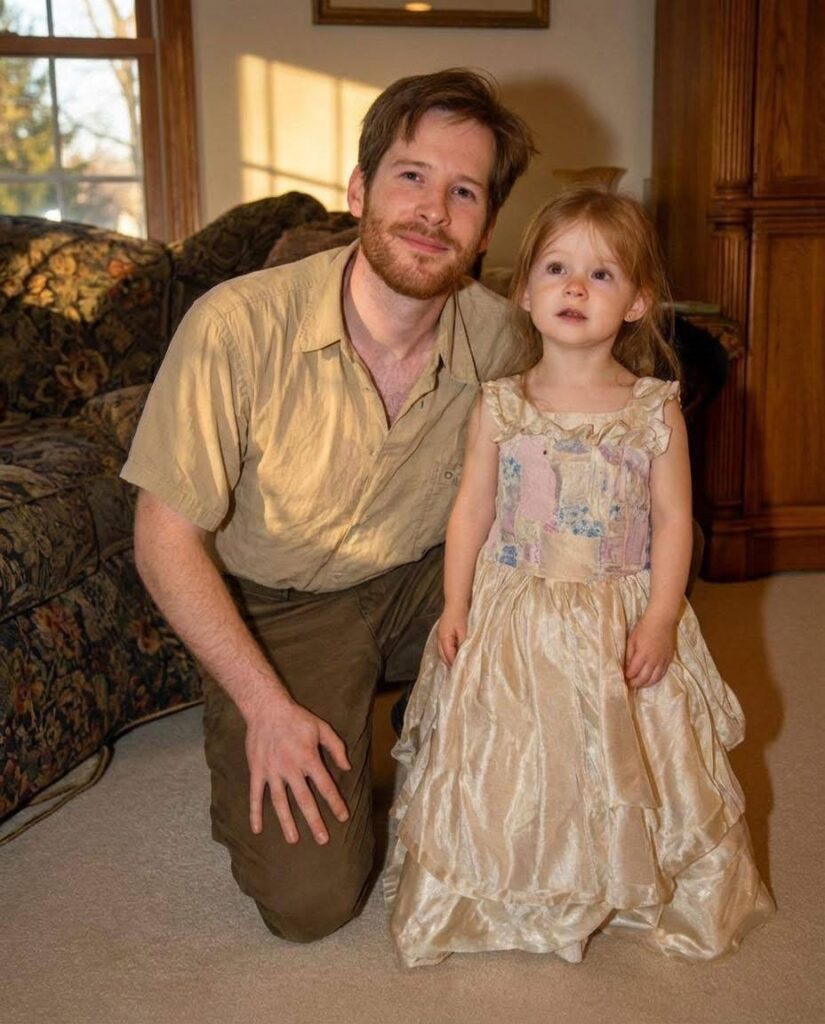
The insult cracked through the air like breaking glass, and for a moment even the fluorescent lights seemed to flicker in shame. Laughter, thin and nervous, died as quickly as it tried to rise. Melissa’s fingers twisted in the skirt her father had worked on past midnight, every crooked stitch now feeling like a spotlight on her. The rich girl’s words—“My dad can buy ten of those”—hung like smoke. Then a smaller voice, trembling but stubborn, rose from the front row, and the daughter of the man who’d just sneered at the price of love turned toward her father and as
“Why didn’t you make me one, then?” she asked, not cruel, just honestly confused. Her question sliced cleaner than any adult’s outrage. The wealthy father’s smirk collapsed, his jaw tightening as if he’d been slapped in front of his own reflection. Parents who’d laughed a second earlier now stared at their shoes, at the posters on the walls, anywhere but at him. The teacher, voice shaking slightly, stepped in, explaining how Melissa’s father had worked double shifts, how he’d watched online videos to learn hemming and invisible zippers, how his first attempt at a dress had gone crooked and he’d started over rather than let his daughter feel “less than.” The room listened, trapped, as the story unfolded: the needle pricks on his fingers, the borrowed sewing machine, the way Melissa had fallen asleep on the couch waiting for him. The silence that followed felt like a verdict, heavy and unspa
It was the rich girl who moved first. She slid off her chair, the expensive fabric of her store-bought costume whispering as she crossed the room. Her father reached out as if to stop her, then let his hand fall, powerless. Standing in front of Melissa, she stared at the uneven stitches, at the tiny patch where the thread didn’t quite match, and whispered, “My dad never made me anything.” The words were not an accusation, but they landed like one. Eyes turned to the man in the tailored suit, his cufflinks suddenly garish against the rawness of the moment, and for the first time, he looked small, like a man who’d just realized what his money could nev
After the performance, nobody rushed for the door. Parents lingered, some offering awkward compliments that sounded more like confessions. The wealthy father approached Mark and Melissa, his daughter clinging to his hand, her eyes still fixed on the handmade dress. His apology came out halting, stripped of charm and practiced ease: not for being rich, but for being careless. He asked, quietly, if Mark would show him how to thread a needle. Weeks later, at another school event, Melissa spotted the rich girl in a slightly lopsided skirt, seams not quite straight, pride glowing from every flaw. In the end, the insult that tried to price a father’s love became the moment two children learned what it means to be chosen, not bought—and two fathers learned that what you make with your own hands can remake who you are.