
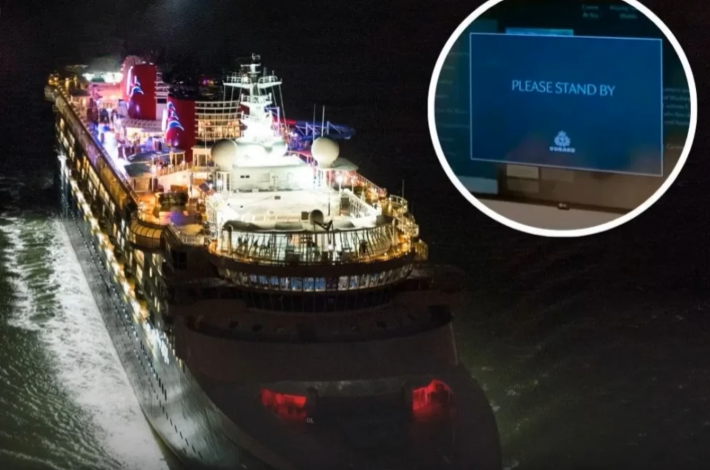
When Luxury Met Danger: The Night the Queen Anne Went Dark
A world cruise promises endless horizons, sparkling seas, and a floating palace of comfort. For passengers aboard the Cunard Queen Anne, its maiden 111-night voyage was meant to be the trip of a lifetime—a celebration of elegance and maritime tradition. But as the ship sailed from the open Pacific into tropical waters, one evening transformed opulence into urgency, elegance into tension.
It began on a quiet night in the Sulu-Celebes Sea, the waterway linking the Philippines, Malaysia, and Indonesia. Suddenly, the captain’s voice echoed over the intercom: unplug non-essential lights, draw blackout curtains, leave all open decks, and stay inside. The Queen Anne—usually a glowing jewel against the dark ocean—would become a “ghost ship.”
The reason? Modern piracy. Though we often think of pirates as relics of history, the Sulu-Celebes Sea is still a hotspot for maritime crime and kidnappings. By eliminating its light signature, the ship would become nearly invisible to any small craft lurking in the shadows.
Passengers went from sipping cocktails in golden lounges to sitting in eerily dark cabins, hearts racing as the hum of the promenade decks fell silent. A video captured during the blackout went viral, showing dimly lit corridors as the massive liner slipped silently through the night. Millions watched, learning firsthand that even luxury vessels must respect the power and unpredictability of the sea.
Maritime experts quickly weighed in, explaining that high-seas safety involves far more than comfort. Ships traveling through high-risk zones—like parts of Southeast Asia or the Gulf of Aden—often employ security teams, advanced radar systems, and even Long Range Acoustic Devices (LRADs) to deter threats. The Queen Anne’s blackout was a precaution, turning it into a “hard target” that pirates wouldn’t risk approaching.
The geography of the Sulu-Celebes Sea makes it a haven for maritime criminals. Thousands of tiny islands offer cover, and even a high-profile cruise ship can be vulnerable if it isn’t prepared. Yet the Queen Anne’s crew acted swiftly, navigating danger without panicking passengers, demonstrating the skill and vigilance required to safeguard thousands of lives.
By morning, the sun returned, decks reopened, and luxury resumed. But the experience lingered. For the passengers, the ocean was no longer just a picturesque backdrop—it was a living, unpredictable frontier. That night of darkness became the most talked-about event of the voyage, a reminder that adventure often lies in the unexpected and that safety is an invisible but essential companion to luxury.
As the Queen Anne sailed onward, the memory of the “ghost ship” night remained: a testament to the captain’s foresight, the crew’s discipline, and the hidden complexities of life at sea. Luxury returned, but with it came a deeper respect for the power of the ocean and the professionals who protect those who traverse it.
Have you ever experienced a travel moment that took you by surprise? Share your story in the comments and let the adventure continue!