
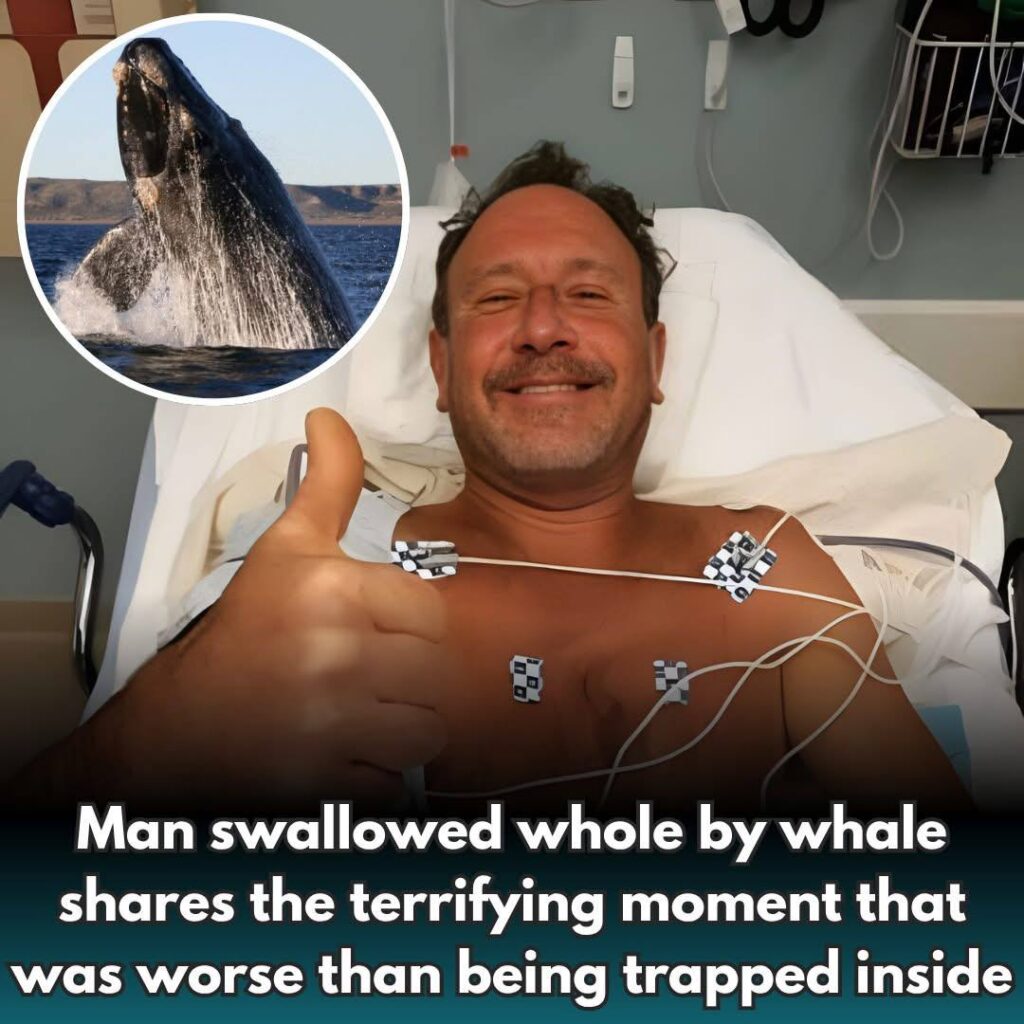
Commercial diver Michael Packard became famous around the world after surviving a bizarre encounter with a humpback whale that briefly swallowed him whole.
But despite the unbelievable nature of that incident, Packard says it was not the most frightening experience of his life.
The experienced lobster diver has faced multiple life-threatening situations, including one that left him trapped and injured in the wilderness for days. According to Packard, that ordeal was far more terrifying because of the fear, isolation, and uncertainty that came with it.
For most people, being swallowed by a whale would be the kind of event that permanently changes how they view danger. Yet Packard says he was able to remain relatively calm during the encounter because he had already survived something even more psychologically devastating.
The day Michael Packard was swallowed by a whale
Packard was working as a commercial lobster diver off the coast of Cape Cod, Massachusetts, when the unbelievable incident occurred.
It was supposed to be a normal day at sea.
After completing two routine dives, Packard prepared for his third descent. Everything appeared to be going as planned until he suddenly felt an enormous force strike him underwater.
Recalling the moment, Packard compared the impact to being hit by a freight train.
“It was like a freight train,” he said.
Within seconds, everything around him went dark.
At first, Packard believed he had been attacked by a shark. He felt himself being pulled through the water, surrounded by powerful movement and unable to see what was happening.
Then he realized the truth.
He was inside the mouth of a whale.
The darkness, pressure, and rushing water made it difficult to understand what was happening. His breathing regulator was knocked loose during the terrifying moment, creating an even more dangerous situation.
Fortunately, he managed to grab the regulator and reconnect it, allowing him to continue breathing.
But in that moment, he believed his life was about to end.
“This is it, this is how you die,” he remembered thinking.
His thoughts immediately turned to his wife and children. He believed he was about to die inside the ocean, trapped inside one of the largest creatures on Earth.
However, the terrifying situation lasted less than a minute.
The whale, believed to have been a humpback, quickly realized it had accidentally taken in something it could not eat. The animal moved toward the surface, shook its head, and expelled Packard back into the ocean.
Suddenly, he was free.
The diver found himself floating on the surface, trying to process what had just happened.
Although he had escaped, the rapid change in depth created another danger. Divers who rise too quickly can experience decompression sickness, a potentially serious condition caused by changes in pressure.
Despite everything, Packard survived.
“I’m messed up, I know, but I think I’m going to live,” he recalled thinking.
Marine experts later explained that while the incident was extremely rare, it was possible. Humpback whales are filter feeders and have relatively narrow throats, meaning they cannot swallow a human into their stomachs.
Experts believe Packard was accidentally caught during feeding before being quickly released.
Despite becoming internationally known for the encounter, Packard remained positive about the experience.
“I’m still the same old guy doing my same old stuff,” he said.
But incredibly, he insists the whale attack was not the worst moment he has ever faced.
The accident that changed him forever
Years before his famous whale encounter, Packard survived another near-death experience that he says was far more frightening.
While flying, Packard was involved in a plane crash that left him stranded in a remote jungle.
The crash caused severe injuries, including a punctured lung, four broken ribs, and a severed Achilles tendon. He also suffered a serious head injury that later required approximately 180 stitches.
Unlike the whale incident, which lasted less than a minute, the aftermath of the crash lasted for days.
Packard was alone in the wilderness, badly injured, and unsure whether anyone would find him.
For three days, he remained stranded while waiting for rescue.
That period of isolation was what made the experience so traumatic.
He had time to think about his injuries, his chances of survival, and whether help would ever arrive.
“I probably would have lasted another day,” he said.
The physical pain was only part of the struggle. The psychological impact of being completely alone, injured, and uncertain about the future left a deeper impression on him than the whale encounter.
Why the jungle crash was worse than the whale attack
Packard believes the biggest difference between the two experiences was the amount of time he had to suffer mentally.
Inside the whale, he immediately believed he was going to die — but the ordeal ended almost instantly.
The plane crash, however, forced him to endure days of fear and uncertainty.
The whale encounter was a moment of extreme danger.
The jungle survival experience was a battle against both his injuries and his own thoughts.
For many people, being swallowed by a whale would be unimaginable. But for Michael Packard, the experience that truly haunted him was not being inside a giant animal — it was lying injured and alone in the wilderness, wondering if rescue would ever come.