
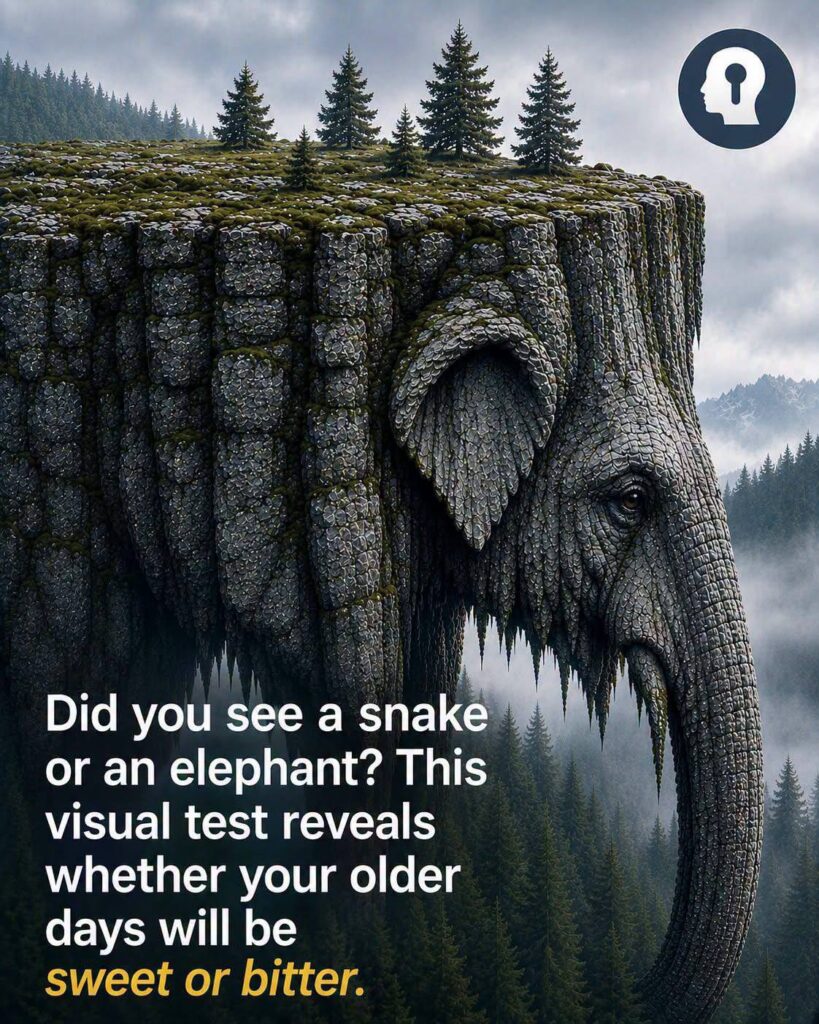
A still image shouldn’t feel this unsettling. Yet one drawing of a snake and an elephant can spark arguments, diagnoses, and viral claims about who you “really” are. Friends swear the first animal you saw exposes your hidden nature. Headlines promise shocking truths. But behind the drama is a quieter, stranger reali… Continues…
A single picture that can be seen as either a snake or an elephant doesn’t secretly decode your soul; it exposes how your visual system works. Ambiguous or “bistable” images are carefully constructed so the same lines, shadows, and contours genuinely support more than one plausible interpretation. Your brain must choose one at a time, organizing contours into objects and separating figure from background. Nothing on the page moves, yet your perception can flip as if the drawing has transformed.
That flip is scientifically precious. It shows perception is not a camera passively recording pixels, but an active process shaped by attention, prior knowledge, context, and where your eyes land first. Online quizzes often leap from this real phenomenon to unsupported claims about personality, intelligence, fear, or creativity. Without rigorous studies—reliability, validity, controlled conditions—those claims remain entertainment, not diagnosis. The honest takeaway is beautifully modest: if you saw the snake first, you saw the snake first. The wonder lies not in what that “means” about you, but in how dramatically your experience can change while the world outside your eyes stays exactly the same.