
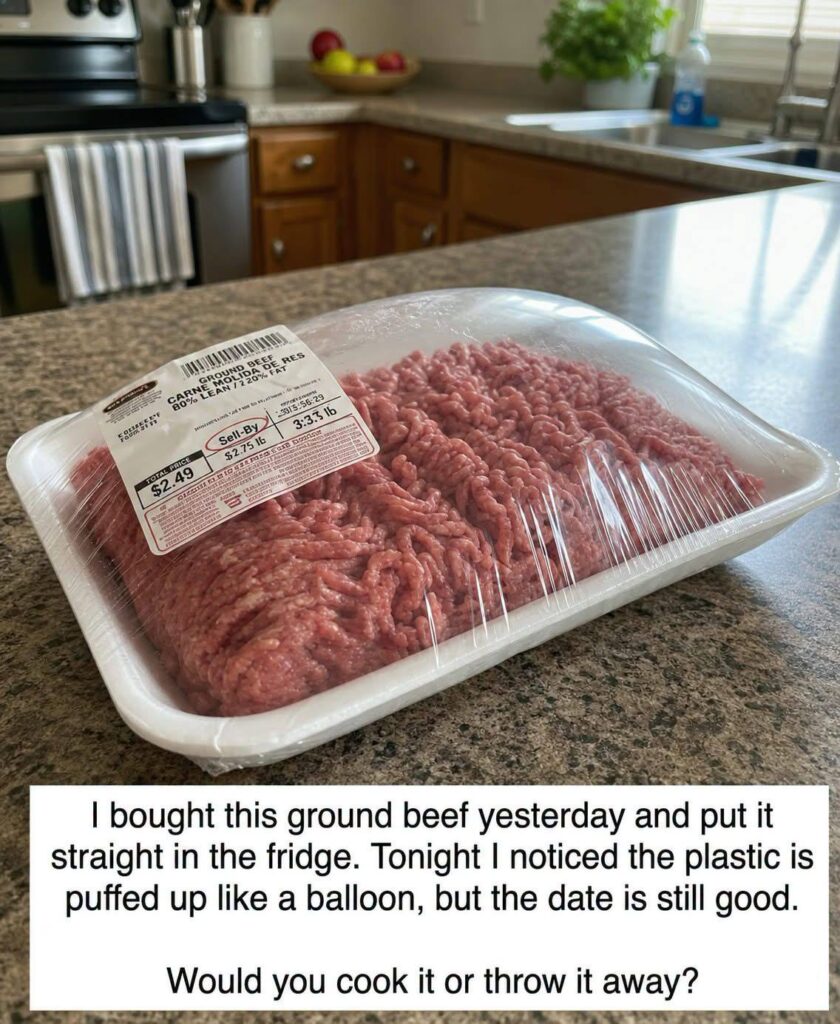
Bloated packaging can look harmless—until you realize what it might be hiding. That puffy bag or swollen plastic wrap could mean protection… or dangerous gas from multiplying bacteria. One keeps your snacks crispy. The other can send you to the ER. Knowing the difference before you open, sniff, or taste could literally sav… Continues…
That oddly puffed-up bag of chips in your pantry is often nothing to fear. Many snack manufacturers intentionally fill bags with nitrogen to stop the chips from shattering and going stale. That “extra air” is really a protective cushion, not a sign of spoilage. In contrast, tightly sealed foods like cheese, sausages, and some deli meats are usually packaged with as little air as possible, because oxygen can help harmful microorganisms grow and shorten shelf life.
Trouble starts when normally flat or firm packages suddenly swell. In perishable foods, gas created by bacteria can cause plastic or cans to bulge, sometimes indicating spoilage or even dangerous pathogens. Dairy products, vacuum-packed meats, and canned goods are common culprits. To stay safe, skip any swollen packages at the store, refrigerate perishables quickly, store cans in a cool, dry place, and always check dates, smell, and appearance. When packaging looks suspicious, don’t taste “just to see.” Throw it out—your health is worth more than a meal.