
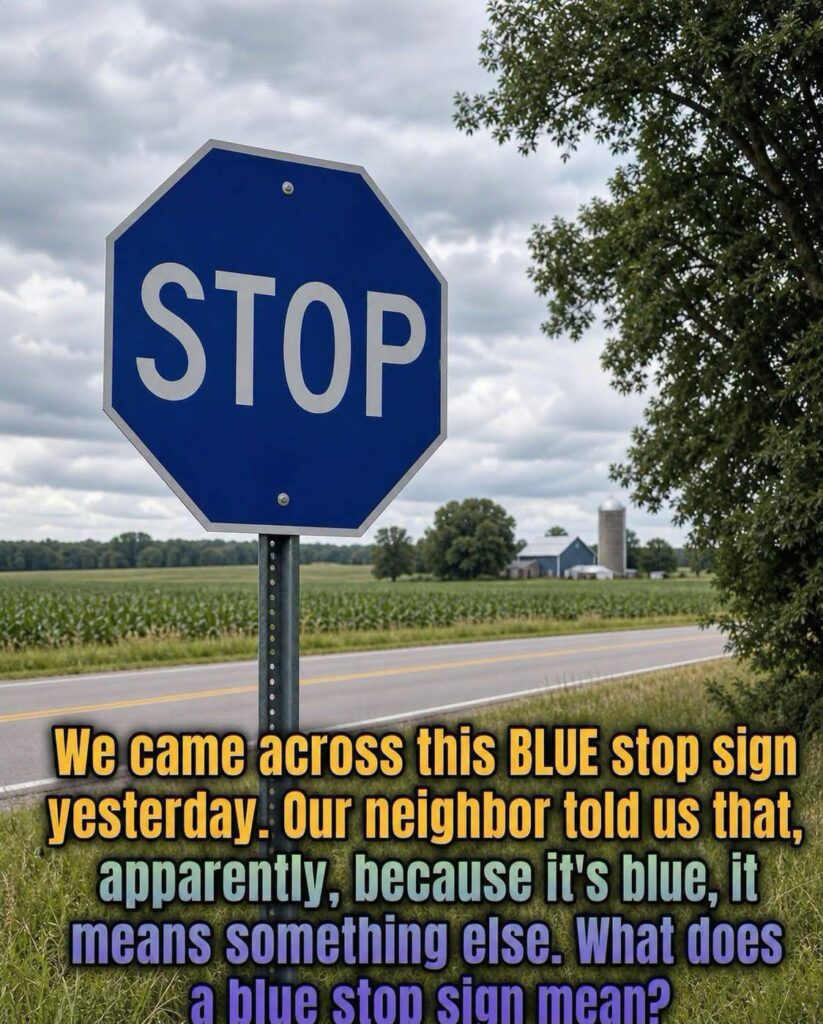
A blue stop sign feels wrong the instant you see it. Your brain flinches, then races: Is this fake, or will I get punished if I ignore it? On private campuses, gated neighborhoods, and tucked-away parking lots, these signs blend in as if they belong—until the day you realize they don’t mea… Continues…
That blue stop sign is a psychological trap dressed up as safety. Legally, in the U.S., a true stop sign is red, reflective, and standardized under the Manual on Uniform Traffic Control Devices. Anything else—especially blue—is not an official traffic control device and usually sits on private property, where its power is more social than legal. You’re not technically breaking a traffic law by rolling past it, but you might still face consequences from property owners, campuses, or security teams who treat it as if it were real.
Worse, these off-color signs chip away at your internal map of what to trust on the road. If some “stop” signs don’t count, hesitation creeps in where certainty should live. The safest move is simple: treat every stop command as if it can hurt someone, even when the color is wrong—and remember that design alone doesn’t make a rule legitimate.